
Nashville’s Summer Heat Problem Is Costing You Hundreds
When June temperatures in Nashville climb past 95°F and humidity hovers near 80%, your air conditioner isn’t just working—it’s fighting for its life. If you live in a 1960s-80s ranch home in Bellevue or a newer contemporary build in Hermitage with expansive windows, you’re watching your Nashville Electric Service bill climb $50 to $150 higher than spring months. Those large windows that flood your living room with natural light? In summer, they’re functioning as solar ovens, pumping unwanted heat directly into your home.
According to the U.S. Department of Energy, approximately 30% of a home’s heating energy is lost through windows, and during cooling season, about 76% of sunlight that falls on standard double-pane windows enters as heat (Source: U.S. Department of Energy, Energy.gov Windows Guide, 2023). For Nashville homeowners, this translates to your HVAC system running overtime while NES charges pile up. The solution isn’t replacing all your windows—it’s controlling what gets through them with energy efficient shutters designed for Nashville’s specific climate challenges.
How Energy Efficient Shutters Work in High-Humidity Climates
The Science Behind Heat-Blocking Shutters
Energy efficient shutters aren’t your grandmother’s decorative window treatments. Modern insulated shutters feature a hollow-core or foam-filled construction that creates a thermal barrier between your window glass and your interior living space. When closed, they trap a layer of insulating air that reduces heat transfer by up to 50% compared to bare windows (Source: ENERGY STAR, Window Treatments and Coverings Fact Sheet, 2022).
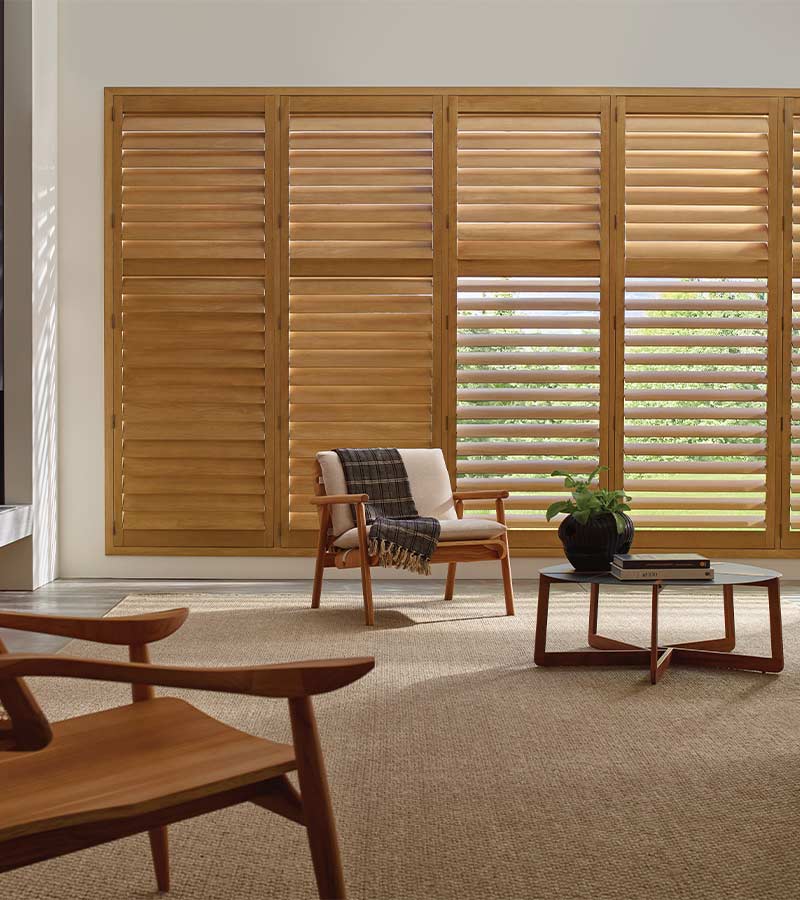
In Nashville’s humid subtropical climate, this matters more than in drier regions. High humidity means your AC isn’t just cooling air—it’s also working to remove moisture. Every degree of heat gain through your windows forces your system to work harder on both fronts. Plantation-style shutters with adjustable louvers let you control exactly how much light enters while the solid frame maintains your thermal envelope.
Why Nashville’s Architecture Demands Custom Solutions
The dominant housing stock in neighborhoods like Donelson and areas near Nashville International Airport features those classic ranch-style homes built between 1960 and 1985. These homes typically have:
- Single-pane or early double-pane windows with minimal UV protection
- Large picture windows in living areas facing south or west
- Limited roof overhangs that fail to shade windows during peak sun hours
- Original aluminum-frame windows with poor thermal breaks
Newer contemporary builds throughout Nashville present a different challenge—floor-to-ceiling windows and open floor plans that look stunning but act as massive heat collectors. In both cases, heat blocking shutters provide the targeted intervention your specific architecture needs without the $15,000-$30,000 price tag of full window replacement.
Real Savings: What Nashville Homeowners Can Expect
Breaking Down the Numbers
The average Nashville household spends approximately $1,800 annually on electricity, with summer cooling accounting for roughly 47% of that total (Source: U.S. Energy Information Administration, Residential Energy Consumption Survey, 2020). When you install energy efficient shutters on your most sun-exposed windows, you can reduce solar heat gain by 45-65%, depending on shutter material and installation quality.
Here’s what that means for your NES bill:
| Window Exposure | Estimated Monthly Summer Savings | Annual Cooling Savings |
|---|---|---|
| South-facing windows (primary heat source) | $18-$32 | $72-$128 |
| West-facing windows (afternoon heat) | $22-$38 | $88-$152 |
| Whole-home installation | $45-$85 | $180-$340 |
These figures assume a 2,000 square foot home with average window coverage. Larger homes with more glass, like many newer builds near Percy Warner Park, may see proportionally higher savings.
The Payback Period Reality
Quality insulated shutters for a typical Nashville ranch home cost between $2,500 and $5,500 for a whole-home installation, depending on window count and material selection. At an average annual savings of $260, your payback period ranges from 9.5 to 21 years. However, factor in the 10-15% home value increase that interior shutters provide (Source: National Association of Realtors, Remodeling Impact Report, 2022), and the investment math shifts dramatically in your favor—especially in Nashville’s competitive real estate market.
Choosing the Right Shutters for Your Nashville Home
Material Options for Maximum Efficiency
Not all shutters perform equally in Nashville’s climate. Your material choice directly impacts both thermal performance and longevity in our humid environment:
- Composite/Engineered Wood: Best overall performer for Nashville. Resists humidity warping, provides excellent insulation, and won’t crack in temperature swings. R-value typically 2.5-3.5 per inch.
- Vinyl/PVC: Budget-friendly and humidity-resistant but offers lower insulation value. Works well in secondary rooms where maximum efficiency isn’t critical.
- Real Wood: Beautiful but requires careful material selection for Nashville humidity. Basswood and poplar handle our climate better than pine. Requires periodic refinishing.
- Aluminum Core: Emerging option with foam-filled cores offering R-values up to 4.0. Excellent for contemporary homes where slim profiles matter.
Installation Considerations for Existing Homes
Proper installation makes or breaks your energy savings. For Nashville’s older ranch homes, inside-mount installations typically provide better thermal sealing because the shutter frame sits within the window casing, minimizing air gaps. Newer homes with deep window frames benefit from either approach, but outside mounts can add architectural interest while still delivering performance.
Critical installation factors include:
- Weatherstripping at frame contact points
- Proper louver tension to maintain closure
- Frame squareness to prevent heat-leaking gaps
- Appropriate clearance for window operation
Pro Tip: When getting quotes from Nashville installers, ask specifically about their approach to thermal sealing. A $200 difference in quote price often reflects whether the installer includes proper weatherstripping and gap management—details that determine whether you get 25% or 50% heat reduction.
Why Nashville Homeowners Trust Local Window Treatment Specialists
Choosing energy efficient shutters isn’t the same as picking out curtains at a big-box store. Your investment deserves a provider who understands Nashville’s specific challenges—from the way summer afternoon sun blasts west-facing windows in Bellevue to the unique window configurations found in mid-century homes throughout Donelson and Hermitage.
When evaluating installers, look for these trust signals:
- Minimum 10 years serving the Nashville metro area
- Familiarity with NES energy audit programs and potential rebate coordination
- Portfolio showing installations in homes similar to yours
- Warranty coverage of at least 5 years on materials and 2 years on installation
- Willingness to perform a window-by-window heat gain assessment before quoting
The right partner won’t just sell you shutters—they’ll help you prioritize which windows deliver the fastest payback, recommend the appropriate material for your specific humidity exposure, and ensure your installation actually performs to specification. That’s the difference between a purchase and a genuine window insulation solution for your Nashville home.
Ready to stop watching your hard-earned money disappear into NES payments this summer? Schedule your free energy savings consultation and see exactly how much you could save on your Nashville Electric Service bill with properly installed energy efficient shutters.
Frequently Asked Questions About Energy Efficient Shutters in Nashville
What makes shutters more effective than blinds or curtains for Nashville summers?
Shutters outperform other window treatments in Nashville’s climate because their rigid frame and thick louver construction create a more complete thermal barrier. While curtains and blinds allow convective air currents to circulate between the treatment and glass—pulling cooled air against hot windows and warming it—shutters’ tight-fitting frames interrupt this cycle. The Department of Energy notes that highly reflective blinds can reduce heat gain by around 45%, but properly installed insulated shutters achieve 50-65% reduction because they add both reflective and insulative properties (Source: U.S. Department of Energy, Energy Saver Guide, 2023). For a Nashville home battling 95°F+ days with high humidity, that 15-20% difference compounds across every window and every hour of peak cooling demand.
Can I install energy efficient shutters myself to save money?
DIY installation is technically possible if you have intermediate carpentry skills and precision measuring tools. However, the energy efficiency gains depend entirely on achieving tight, gap-free installation. Professional installers use specialized mounting techniques and weatherstripping protocols that maintain the thermal envelope—details that determine whether your shutters perform at 30% or 60% heat reduction. Given that the labor portion typically represents only 20-30% of total project cost, DIY savings rarely justify the performance sacrifice. Additionally, most manufacturer warranties require professional installation to remain valid, meaning a DIY approach could leave you unprotected if material defects emerge.
How long do quality energy efficient shutters last in Nashville’s humid climate?
Properly manufactured composite or engineered wood shutters installed in Nashville homes typically last 20-25 years with minimal maintenance. The key longevity factor is material selection appropriate to our humidity levels—cheap imported shutters using moisture-sensitive MDF cores may begin warping within 3-5 years, while quality composite products with humidity-resistant cores maintain their seal and insulating properties for decades. Real wood shutters require more attention, needing refinishing every 5-7 years to prevent moisture damage, but can last 30+ years with proper care. When evaluating quotes, ask specifically about core material composition and humidity resistance ratings—this single factor most determines whether your investment delivers lasting Nashville performance.
Frequently Asked Questions
What makes shutters more effective than blinds or curtains for Nashville summers?
Shutters outperform other window treatments in Nashville’s climate because their rigid frame and thick louver construction create a more complete thermal barrier. While curtains and blinds allow convective air currents to circulate between the treatment and glass—pulling cooled air against hot windows and warming it—shutters’ tight-fitting frames interrupt this cycle. The Department of Energy notes that highly reflective blinds can reduce heat gain by around 45%, but properly installed insulated shutters achieve 50-65% reduction because they add both reflective and insulative properties (Source: U.S. Department of Energy, Energy Saver Guide, 2023). For a Nashville home battling 95°F+ days with high humidity, that 15-20% difference compounds across every window and every hour of peak cooling demand.
Can I install energy efficient shutters myself to save money?
DIY installation is technically possible if you have intermediate carpentry skills and precision measuring tools. However, the energy efficiency gains depend entirely on achieving tight, gap-free installation. Professional installers use specialized mounting techniques and weatherstripping protocols that maintain the thermal envelope—details that determine whether your shutters perform at 30% or 60% heat reduction. Given that the labor portion typically represents only 20-30% of total project cost, DIY savings rarely justify the performance sacrifice. Additionally, most manufacturer warranties require professional installation to remain valid, meaning a DIY approach could leave you unprotected if material defects emerge.
How long do quality energy efficient shutters last in Nashville’s humid climate?
Properly manufactured composite or engineered wood shutters installed in Nashville homes typically last 20-25 years with minimal maintenance. The key longevity factor is material selection appropriate to our humidity levels—cheap imported shutters using moisture-sensitive MDF cores may begin warping within 3-5 years, while quality composite products with humidity-resistant cores maintain their seal and insulating properties for decades. Real wood shutters require more attention, needing refinishing every 5-7 years to prevent moisture damage, but can last 30+ years with proper care. When evaluating quotes, ask specifically about core material composition and humidity resistance ratings—this single factor most determines whether your investment delivers lasting Nashville performance.

